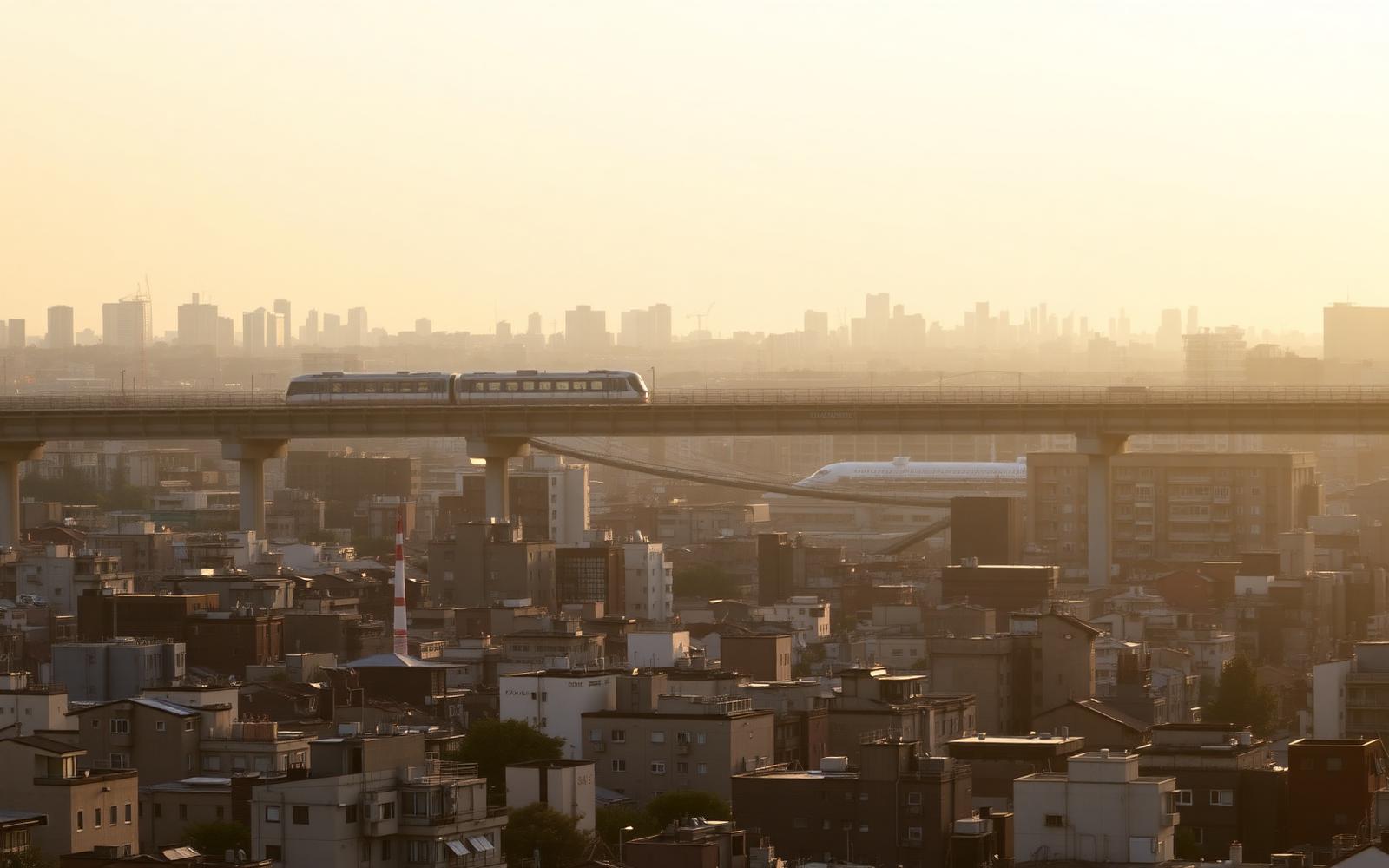
Tokyo at dusk, a train crossing above low-rise neighbourhood streets

Tokyo

A vast, orderly capital built around its railways: dozens of station-centred districts with completely different characters, four distinct seasons, exceptional everyday food and service, and a level of public-transport coverage that makes a car pointless.

The verdict

Tokyo is strong for rail-based freedom, district variety, food at every price level, safety, cleanliness, four real seasons and easy day trips — and weaker for low prices, generous room space, beach or tropical warmth, spontaneous car-based travel and effortless English away from the main hubs.

Your station decides your trip more than the city does. Shinjuku, Shibuya, Tokyo Station, Ginza, Asakusa, Shinagawa, Nakameguro and the western wards are not interchangeable, and the wrong base adds an hour of trains to every ordinary day.

Strong for

  • Rail coverage that removes the need for a car
  • Districts with genuinely different characters
  • Food quality at every price level
  • Safety, cleanliness and reliability
  • Four distinct seasons, including blossom and autumn colour
  • Day trips to mountains, hot springs and the coast

Weaker for

  • Low daily and monthly costs
  • Generous room and apartment space
  • Beaches and tropical warmth
  • Step-free, low-walking travel
  • Effortless English away from the main hubs
  • A dry, comfortable midsummer

What Tokyo actually is

Environment
A temperate, low-rise metropolis with high-rise clusters around major stations, rivers, parks and quiet residential streets one block behind every busy avenue.
Energy
Enormous but orderly. Crowds move quietly, Shinjuku and Shibuya stay up late, business districts empty after work and residential wards go quiet early.
Purpose
City exploration by train, food and shopping, museums and pop culture, design and craft, and day trips out to mountains, hot springs and the sea.
Reality check
Costs are high, rooms are small, walking inside stations is constant, summer is humid with a rainy season and typhoon risk, and administration still runs on cash and paper more often than visitors expect.

Decision guide

City exploration by train, food at every price level, shopping and design, museums and pop culture, day trips to mountains, hot springs and the coast, and an unusually easy base for a long stay.

A low-rise sprawl punctuated by high-rise clusters around major stations, cut by rivers and rail lines, with pockets of parkland, shrines and quiet residential streets one block off every busy avenue.

Rooms are small at every price, distances are longer than the map suggests, summer is hot and humid with a rainy season and typhoon risk, cash and paperwork still surface more than visitors expect, and English support thins out away from the main hubs.

Choose this if

  • You are travelling solo, couples, friends and families.
  • The pace matches you: Intense but calm: enormous crowds that move quietly and predictably. Shinjuku and Shibuya run late and loud, Marunouchi empties after work, and residential wards feel like small towns after 21:00.
  • You are travelling with children.
  • Your dates fall in March, April, May, October and November.
  • You would rather not rent a car: public transport here is strong.

Think twice if

  • Tokyo is materially more expensive than Bangkok, Chiang Mai or Phuket for the same standard, and the exchange rate you get can move the whole budget in either direction.
  • Rooms and apartments are small at every price level, and a family or a long stay usually costs more here to get ordinary space than the nightly rate suggests.
  • The transport advantage is paid for in walking: long transfers, stairs and distances inside stations add up, and reduced mobility needs route planning rather than assumptions.
  • June and July bring the rainy season, midsummer is hot and humid, and typhoon activity through late summer and early autumn can disrupt trains and flights at short notice.
  • English support thins out away from the main hubs, and cash, seals, guarantors and paper forms still appear in everyday administration — most visibly when renting, opening accounts or arranging a long stay.
  • This is a temperate capital, not a beach base: swimming means a trip out of the city and a short summer window, and winter is genuinely cold.
  • You need low physical effort: getting around here is demanding.
  • Your dates are fixed in July and August, the weakest months on record.

Getting there and getting around

  • Tokyo runs on rail: subway and suburban lines reach almost everywhere, a rechargeable IC card covers most of them, and a car is a liability rather than an advantage. The cost is walking — long station corridors, transfers and stairs are part of every journey, and step-free routes exist but are not universal.
  • Two international airports — Haneda close to the city and Narita further out — plus the Shinkansen network for fast travel to the rest of Japan.
  • Walkability: high. Public transport: strong.
  • Flight time and airfare depend on the city you actually start from, not on a default origin.

Who this suits

  • Suits solo, couples, friends and families.
  • physically demanding
  • works well with children

Worth comparing with

  • The historic counterweight: smaller, denser in heritage and easier to cover on foot and by bus.
  • A more informal, food-led big city with lower room rates and quick access to Kyoto and Nara.
  • A northern base with real winter, snow and space, and a milder summer than Tokyo's.
  • A compact, walkable city with a coastline, lower costs and short hops to the rest of Kyushu.
  • The same big-capital convenience at a much lower daily and monthly cost, in a tropical climate.
How MTC reached this assessment

This assessment reads the governed record only: decision identity, traveller fit, season values, mobility, recorded drawbacks and the duration-aware cost model (6 cited sources).

Overall confidence recorded for this place: medium. No ratings, reviews or booking inventory are used.

Data last checked: 2026-08-29

Scheduled for recheck after 2027-08-29.

Find your trip in a few answers

Answer a short set of questions and continue in the full tool — nothing here is a price or a recommendation.

Your answers stay editable in the full tool.

What are you here for?

A trip with a return date: one station base, a handful of districts, a day trip and evenings out.

How long?

7 days

Your exact figure is kept as entered — never rounded or grouped into a band.

Examples:

What that costs

Estimated total for 7 days

Budget

$430 – $740

Mid-range

$1,000 – $1,800

Premium

$2,500 – $5,300

Priced using the weekly pattern.

Visitor costs: per person, per day, on the ground — accommodation on shared or double-occupancy assumptions where appropriate, food, local transport and ordinary activities. The first two days include a short-stay and arrival premium, mostly the airport transfer and first-night room rate.

Visitor bands assume roughly US$70–120 a day on a budget, US$160–290 mid-range and US$400–850 premium, per person, well above Bangkok, Chiang Mai and Phuket levels. Rail passes, ticketed attractions, high-end dining and blossom or autumn room rates push totals higher. Anchors, not promises, and not a currency-rate forecast.

Excludes international airfare, visas and paperwork, insurance, personal shopping and anything personal. Planning estimates only — never a live quote, an availability claim or an exchange-rate guarantee.

Who it suits

  • Travellers who would rather use trains than drive
  • Anyone who plans a trip around food
  • City explorers who like walking all day
  • Families who value safety, cleanliness and reliability
  • Long-stayers who want a serious base with everything nearby
  • Travellers who want spring blossom or autumn colour

Who it may not suit

  • Anyone on a tight budget expecting Southeast Asian prices
  • Travellers who need large rooms or lots of space
  • People who came for a beach and warm sea
  • Anyone who cannot manage long station walks and stairs
  • Visitors expecting English everywhere and card payment everywhere
  • Travellers who dislike humid heat or crowded trains

Why people travel to Tokyo

  • A rail network that makes an enormous city feel manageable.
  • Districts that feel like different cities a few stops apart.
  • Food from standing noodle counters to serious dining rooms.
  • Museums, galleries, pop culture and design in real depth.
  • Shrines, gardens and quiet streets inside the busiest wards.
  • Cherry blossom in spring and colour in autumn, on a real calendar.
  • Day trips to mountains, hot springs, the coast and historic towns.
  • Safety and reliability that make late evenings and solo travel easy.

Timing and seasonality

Late March to April brings cherry blossom and the most competitive prices for rooms; the exact bloom dates move every year and cannot be booked with certainty. May is warm, bright and comfortable. June into mid-July is the rainy season — humid, often grey, rarely a washout of an entire trip. Late July and August are hot and humid, with typhoon risk running into September. October and November are the second peak: dry, clear and cool, ending in autumn colour. December to February is cold, dry and sunny, with the New Year period closing many businesses. Domestic holiday weeks — New Year, Golden Week from late April to early May, and mid-August — fill trains and lift prices. Check current Japan Meteorological Agency warnings before travelling in typhoon season.

Across the twelve months

December – February
Cold, dry and often bright, with short days and low rainfall. Sights are quieter, but the New Year period closes many businesses for several days and lifts domestic travel demand.
March – May
The first peak: cherry blossom in late March and April, then a warm, comfortable May. Bloom dates shift each year, and Golden Week from late April to early May fills trains and raises prices.
June – September
The rainy season through June and into mid-July, then hot, humid midsummer with typhoon risk into September. Prices soften outside mid-August, and indoor plans matter more than in any other season.
October – November
The second peak and, for many, the easiest weather of the year: dry, clear and cool, ending in autumn colour. Demand and room rates climb accordingly.

A typical rhythm: day, weekdays and weekends

A typical day
Mornings start with rush hour roughly between 07:30 and 09:30 — worth avoiding with luggage. Mid-morning to late afternoon suits sights, museums and walking. Evenings belong to food and shopping districts, and the last trains around midnight end the night more firmly than closing time does.
Weekdays
Weekdays are for commuters: crowded trains at the edges of the day, calmer sights in between, and easier seats at restaurants. Many museums close on Mondays.
Weekends
Weekends fill parks, shopping districts and popular attractions, especially in blossom and autumn weeks. Trains are calmer in the morning and busier in the middle of the day than on a weekday.

These are rhythms of the day and week — they are not trip lengths, and they do not change with how long you stay.

What changes when you stay longer

One month or longer
From a month, the decisions change: which ward and which line you actually live on, a commuter pass instead of single fares, groceries and cooking instead of eating out every meal, laundry, a phone and internet contract, utility bills that swing with winter heating and summer cooling, somewhere to work if you need it, and how far your station really is from the places you use. Not every long-stayer is a digital nomad — students, families and people on work assignments have very different priorities.
One year or longer
From a year, move-in and administrative costs become material: the upfront package a standard lease can require, furnishing an unfurnished flat, health insurance and pension contributions, residence paperwork and renewals, a bank account and phone contract, and seasonal utility peaks. These are planning cautions, not legal, tax or immigration advice — verify current requirements yourself.

Getting around

Tokyo runs on rail. Subway and suburban lines reach almost everywhere, a rechargeable IC card covers most journeys, and a car is a liability rather than an advantage. Two airports serve the city — Haneda close in, Narita further out — and the Shinkansen network makes the rest of Japan reachable in hours. The cost of all this is walking: long transfers, corridors and stairs are part of every journey, rush hours around 07:30–09:30 and 17:30–19:30 are genuinely crowded, and the last trains around midnight end the night. Step-free routes exist but are not universal, so anyone with reduced mobility, a pushchair or heavy luggage should plan the route rather than assume it.

Two international airports — Haneda close to the city and Narita further out — plus the Shinkansen network for fast travel to the rest of Japan.

Where to stay, by area

Shinjuku

The busiest interchange in the city wrapped in department stores, offices, izakaya alleys, a large park and a nightlife quarter, all within a few minutes of one another.

Almost every line in western Tokyo passes through, plus airport buses and express trains towards the mountains.

Best for: a first visit and the shortest average journey to anywhere. Strength: unbeatable connections and everything open late. Watch out for: crowds, noise and a station complex that takes real time to learn.

Shibuya

Youth-driven and commercial around the crossing, then immediately calmer up the hills towards Tomigaya, Yoyogi-Uehara and the park.

A major hub for city and suburban lines, and an easy walk to Harajuku, Omotesando and Yoyogi Park.

Best for: shopping, cafés, nightlife and walkable evenings. Strength: energy and variety on foot. Watch out for: price levels, weekend crowds and hills with stairs everywhere.

Tokyo Station & Marunouchi

Corporate, spacious and orderly: wide avenues, the Imperial Palace gardens on one side and a huge underground retail and dining network below.

The Shinkansen gateway and the best base for day trips out of the city, with direct airport access.

Best for: day trips, business travel and a calm night's sleep. Strength: unmatched onward connections and space. Watch out for: an area that empties in the evening and higher room rates.

Ginza & Nihonbashi

The polished, expensive side of the city: flagship stores, long-established restaurants, galleries and department-store food halls.

Central and well connected by metro, and walkable to Tsukiji, Hibiya and the bay side.

Best for: dining, premium shopping and a central, quiet base. Strength: quality and location. Watch out for: the highest prices in the city and little street life late at night.

Asakusa & Ueno

Older, lower and more traditional: temple streets, a big park with major museums, market arcades and long-standing local restaurants.

Direct rail towards Narita and the north, but further from the western nightlife districts.

Best for: value, culture and families. Strength: the lowest central room rates and the most traditional streets. Watch out for: earlier closing times and a longer trip to Shibuya or Shinjuku.

Shinagawa

A business and transit district: hotel towers, office blocks and restaurants built around a very large station rather than a neighbourhood.

Fast direct access to Haneda Airport and a Shinkansen stop for travel west.

Best for: a short trip, an early flight or frequent travel out of the city. Strength: speed to the airport and onward trains. Watch out for: little neighbourhood character and a functional, corporate feel.

Nakameguro & Daikanyama

Low-rise, residential and design-minded: a canal lined with cherry trees, independent shops, coffee and small restaurants instead of department stores.

One or two stops from Shibuya, with good lines but fewer late-night options than the hubs.

Best for: a calmer stay with real neighbourhood life. Strength: atmosphere and everyday quality. Watch out for: high rents, small units and fewer budget options.

Kichijoji & Nakano

Western Tokyo living: covered shopping streets, a large park, supermarkets, schools and everyday prices, with the centre a straight train ride away.

Direct lines into Shinjuku in roughly a quarter of an hour, though the trains are crowded at peak times.

Best for: a month or longer at ordinary prices. Strength: space, value and a genuine local routine. Watch out for: a daily commute and less English support than the central hubs.
Honest trade-offs

  • The rail network that frees you is the same network that makes you walk all day.
  • Central, well-connected stays cost the most and give the least space.
  • The western wards give you value and space, and take back an hour a day in trains.
  • Blossom and autumn are the best weather and the worst prices and crowds.
  • Cheaper summer rates come with humidity, rain and typhoon risk.
  • Exceptional order and reliability come with paperwork, rules and cash.
  • Tokyo is materially more expensive than Bangkok, Chiang Mai or Phuket for the same standard, and the exchange rate you get can move the whole budget in either direction.
  • Rooms and apartments are small at every price level, and a family or a long stay usually costs more here to get ordinary space than the nightly rate suggests.
  • The transport advantage is paid for in walking: long transfers, stairs and distances inside stations add up, and reduced mobility needs route planning rather than assumptions.
  • June and July bring the rainy season, midsummer is hot and humid, and typhoon activity through late summer and early autumn can disrupt trains and flights at short notice.
  • English support thins out away from the main hubs, and cash, seals, guarantors and paper forms still appear in everyday administration — most visibly when renting, opening accounts or arranging a long stay.
  • This is a temperate capital, not a beach base: swimming means a trip out of the city and a short summer window, and winter is genuinely cold.

Similar places in Japan

A short list of relevant Japanese places, not a complete inventory of Japan. Cards without a page are previews, not links. Places outside Japan are listed separately and labelled with their own country.

Kyoto

City

You gain: Concentrated heritage, temples and traditional streets in a city you can cross quickly.

You give up: Tokyo's scale, its rail depth, its nightlife and its range of everyday districts.

Osaka

CityPreview — no page yet

You gain: A more informal, food-led city with lower room rates and fast access to Kyoto and Nara.

You give up: The breadth of Tokyo's districts, museums and international connections.

Sapporo

CityPreview — no page yet

You gain: Real winter and snow, a milder summer, wide streets and more space per yen.

You give up: Central location, flight choice and the density of things within one train ride.

Fukuoka

CityPreview — no page yet

You gain: A compact, walkable city with a coastline, lower costs and short hops around Kyushu.

You give up: Tokyo's variety, its late-night depth and its number of direct long-haul flights.

Hakone & Fuji area

Mountain and hot-spring areaPreview — no page yet

You gain: Hot springs, mountain air and open landscape close enough for a night or two.

You give up: City services, transport frequency and everything a capital keeps open late.

Similar places in Japan

Explore more places in Japan

Looking beyond Japan?

These are outside Japan. Each one is labelled with its own country; those without a page are shown as previews only.

  • Bali Indonesia · IslandPreview onlyIsland living with a bigger long-stay community — page not built yet.

Sources and freshness

Sourced claims cite the Tokyo Metropolitan Government's official GO TOKYO guide, the Japan National Tourism Organization, the Japan Meteorological Agency for climate, rainy-season and typhoon cautions, and official Tokyo Metro network and fare information. Cost anchors use Budget Your Trip's Tokyo traveller-spend benchmarks — crowd-sourced historical traveller data, not official statistics — and current rental listing benchmarks, which are variable market evidence rather than fixed rates. Everything else is an editorial estimate marked as such in the record. Retrieved and updated August 2026; checked 2026-08-29, due for recheck 2027-08-29.

  • GO TOKYO — Tokyo Metropolitan Government official travel guide2026-08-29
  • Japan National Tourism Organization — official travel information2026-08-29
  • Japan Meteorological Agency — climate, rainy season, typhoon and warning information2026-08-29
  • Tokyo Metro — official network, fare and station information2026-08-29
  • Budget Your Trip — Tokyo traveller-spend benchmarks (crowd-sourced historical traveller data)2026-08-29
  • Current Tokyo rental and monthly-stay listing benchmarks (variable market evidence, not a fixed rate)2026-08-29