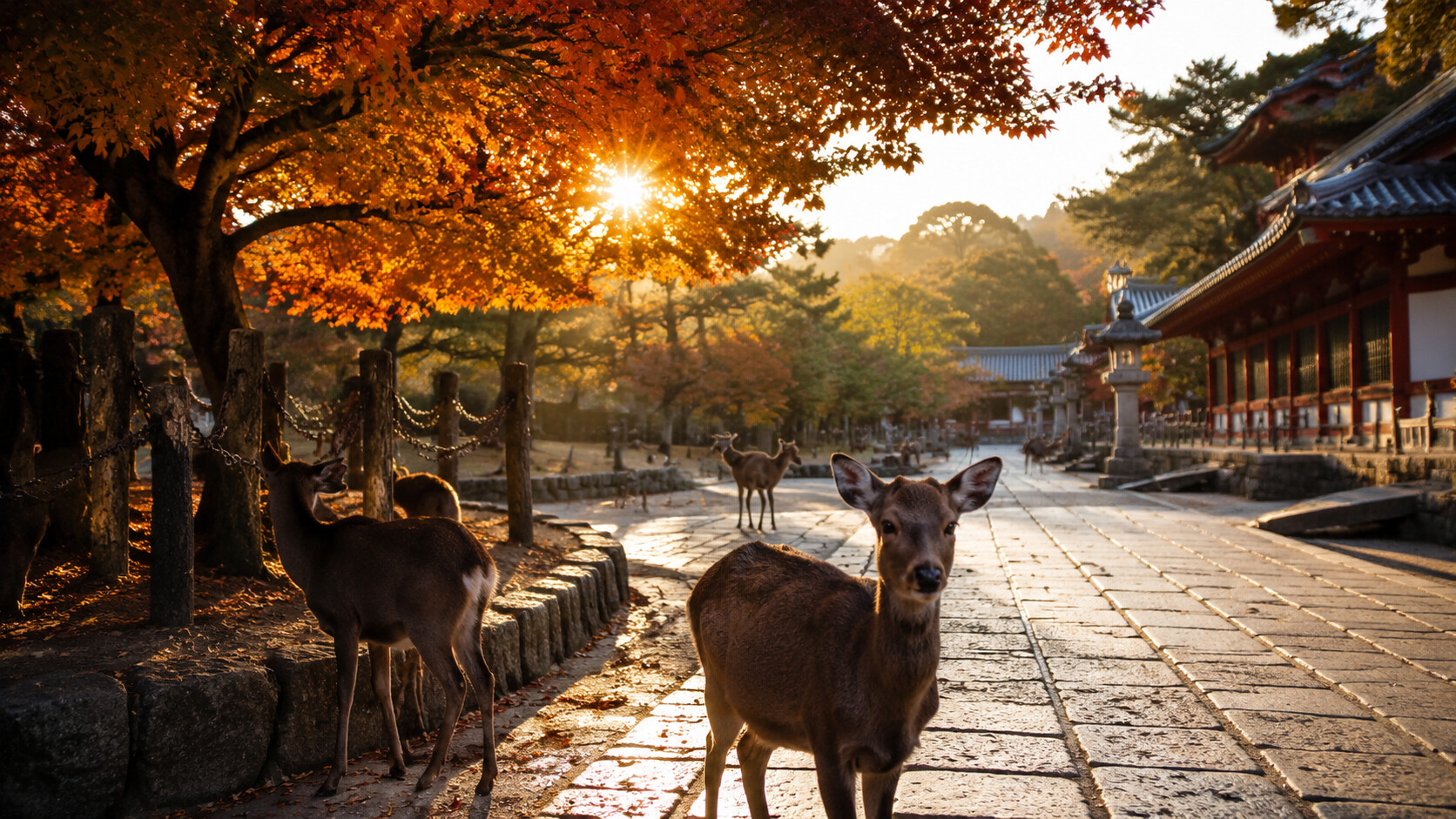
Nara destination landscape

Nara

Choose Nara for temples, parkland and a focused heritage stay that is calmer and more compact than Kyoto.

The verdict

Pick Nara over Kyoto for a shorter, quieter heritage stay; pick Kyoto for deeper multi-day variety.

Many visitors rush Nara as a day trip; one or two nights reveal quieter mornings and neighbourhoods after tour groups leave.

Strong for

  • Tōdai-ji and Nara Park
  • Kasuga Taisha forest walk
  • Naramachi evening walk
  • Hōryū-ji excursion

Weaker for

  • The park is crowded during core day-trip hours.
  • Evenings are quiet and options narrow early.
  • A long stay can feel thin without regional excursions.

What Nara actually is

Environment
A compact historic city where wooded temple precincts meet traditional streets and ordinary residential life.
Energy
Quiet, reflective and walkable, with daytime visitor surges around the park.
Purpose
Ideal for a one-to-three-night heritage pause between Kyoto and Osaka.
Reality
You gain calm and concentration but give up Kyoto’s breadth, nightlife and long-stay variety.

What are you here for?

A trip with a return date: the main sights, the food and one or two areas done properly.

How long?

2 days

Your exact figure is kept as entered — never rounded or grouped into a band.

Examples:

What that costs

Estimated total for 2 days

Budget

$138 – $225

Mid-range

$300 – $525

Premium

$750 – $1,500

Priced using the daily pattern.

Visitor estimates cover accommodation, food, local transport and everyday activity. International airfare is excluded. The first days cost more than the settled days: arrival, transfers and orientation are front-loaded.

These are planning estimates from reviewed research, not live prices or availability.

Excluded: international airfare, visas, insurance, shopping and one-off personal costs.

Who it suits

  • Solo travellers
  • Couples
  • Groups of friends
  • Families with children — workable with planning

Who it may not suit

  • crowd-sensitive — The park is crowded during core day-trip hours.
  • nightlife-first — Evenings are quiet and options narrow early.
  • long stays — A long stay can feel thin without regional excursions.

Why travellers come

  • The defining heritage and landscape anchor, best before peak day-trip hours.
  • Adds lantern-lined forest paths and a quieter sacred atmosphere.
  • Shows the city beyond the deer park through shops, houses and local dining.
  • Adds major early Buddhist architecture beyond the central visitor circuit.

Timing and seasonality

March-May and October-November suit walking; early mornings are valuable year-round for quieter temple visits.

How Nara repeats itself

  • Keep one flexible neighbourhood walk or meal window each day so weather, traffic and energy do not break the itinerary.
  • Use one low-pressure day and one longer cultural or nature anchor; Tōdai-ji and Nara Park is a useful first reference point.
  • Reprice accommodation and transport, check current local conditions, and reserve a low-logistics reset weekend.

What changes when you stay longer

One month or longer
Indicative accommodation, local transport, meals and ordinary activities; excludes international airfare, visas, insurance and refundable deposits.
One year or longer
Indicative accommodation, local transport, meals and ordinary activities; excludes international airfare, visas, insurance and refundable deposits.

Getting around

Walk between Nara Park sights, then use local buses or rail for outer temples; choose accommodation near Kintetsu Nara for convenience.

Where to stay

Kintetsu Nara

Best balance of rail access, restaurants and walking distance to the park.

Use walking and public transport for nearby trips; plan transfers for outer districts.

Convenience, noise and value vary by exact street and peak demand.
Naramachi

Traditional lanes, machiya character and calmer evenings south of the centre.

Use walking and public transport for nearby trips; plan transfers for outer districts.

Convenience, noise and value vary by exact street and peak demand.

JR Nara

Practical rail access and usually better-value accommodation.

Use walking and public transport for nearby trips; plan transfers for outer districts.

Convenience, noise and value vary by exact street and peak demand.

Honest trade-offs

  • Convenience, noise and value vary by exact street and peak demand.
  • Convenience, noise and value vary by exact street and peak demand.
  • Convenience, noise and value vary by exact street and peak demand.
  • The park is crowded during core day-trip hours.
  • Evenings are quiet and options narrow early.
  • A long stay can feel thin without regional excursions.

Alternatives worth considering

In the same country

  • Kyoto Choose Kyoto for a deeper, broader heritage stay.
  • Osaka Choose Osaka for food, nightlife and urban energy.

International

  • Gyeongju Choose Gyeongju for Korean heritage in a wider regional landscape.

Similar places in Japan

Explore more places in Japan

Looking beyond Japan?

These are outside Japan. Each one is labelled with its own country; those without a page are shown as previews only.

  • Bali Indonesia · IslandPreview onlyIsland living with a bigger long-stay community — page not built yet.

Sources and freshness

Planning guidance checked 30 August 2026; verify prices, schedules, entry rules and local conditions before booking.

  • Visit Nara2026-08-30
  • Nara Kotsu Bus2026-08-30
  • Numbeo Nara2026-08-30

Daily ground budget

What one day on the ground costs here, per traveller, with international airfare excluded.